
Either/Or
Representation and the reduction of reality

I had this idea the other day about the computerization of reality, and why humanity seems unable to stop the project.
Ten thousand years ago, in the caves, it started with a different kind of reduction. Pictures: re-presentations of buffalo, horses, women.
It seems self-evident that no one thought this carving from ~27,000 years ago was a real woman:
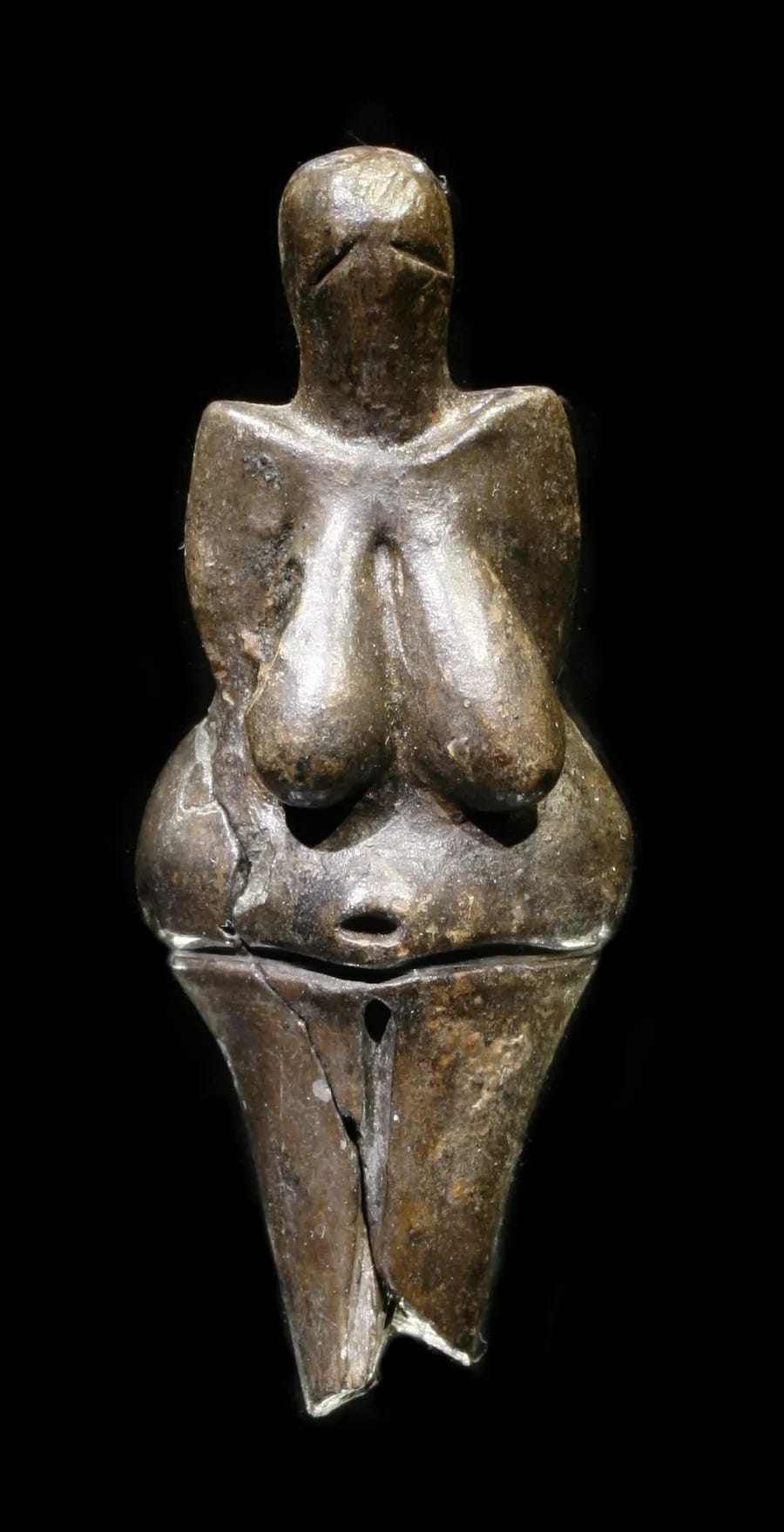
I strongly suspect that nobody thought to try to actually procreate with this. It was a representation, but it was nowhere close to causing confusion in the mind.
I’m sure it seemed like a kind of breakthrough, because these figures appear all over the place from about 40,000-years ago right up through the time of Jesus, apparently.
But I started thinking again about representation. The mimicking of reality, the reducing it, the repackaging it, manipulating it. For a long time, there wasn’t mass/industrial reproduction. You had statues, paintings, and the special case of text, but in the early days, all of these were manually produced and not easily reproduced. Again, though: text loomed as a special phenomenon.
There was clearly an accelerating movement in the direction of… confusing the mind. A movement from the Venus of Willendorf style, which persisted for 40,000 years, which functioned like an alarm clock, just a kind of reminder, saying nothing more than: “Woman, curves, babies. Do not forget.”
But once the idea of realism appeared, it was an arms race to create re-reality.
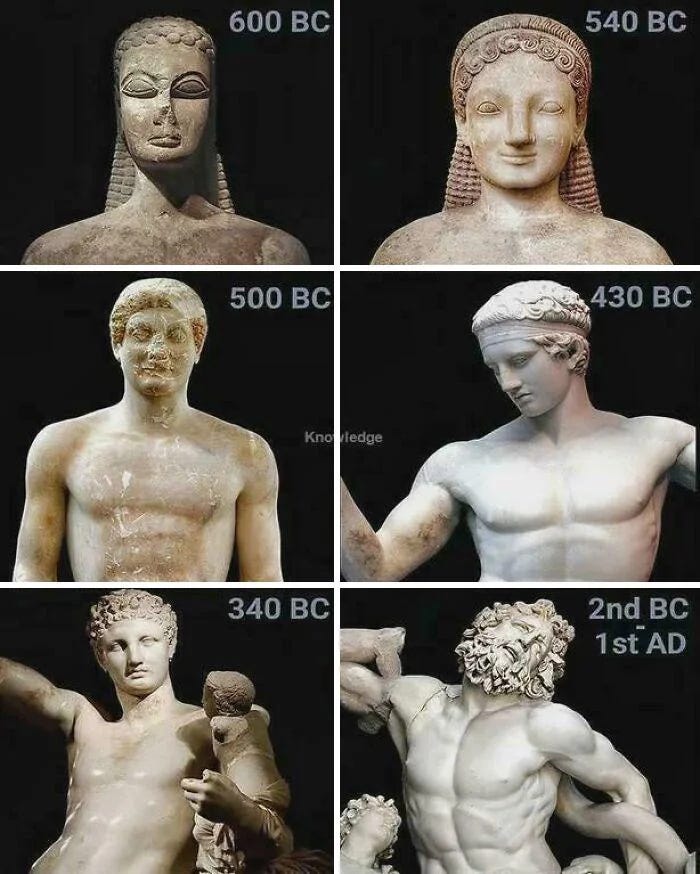
We can argue about painting, but the same movement is seen there from the earliest cave paintings, which could not be mistaken for horses and bison, to the almost hyper-realistic dramatized re-realities of Caravaggio and those downstream of him.
Indeed, in visual art, there are interesting arguments about realism as a style and goal — some tend to lament the arrival at “disenchanted” reality as depicted by Courbet and Millet.
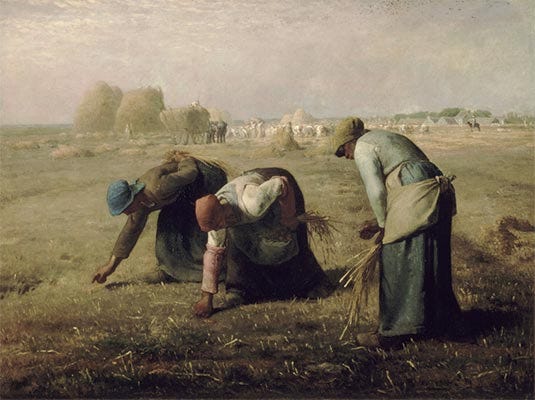
So, arguably, the sorts of heightened realities we see in Fra Angelico and the Greek Tragedians, which are closer to reality than cave paintings, but not “real” in the same way it’s real to stub your toe on the way to your morning shower — these modes retained some of the Venus of Willendorf impulse to represent reality with style, through a filter.
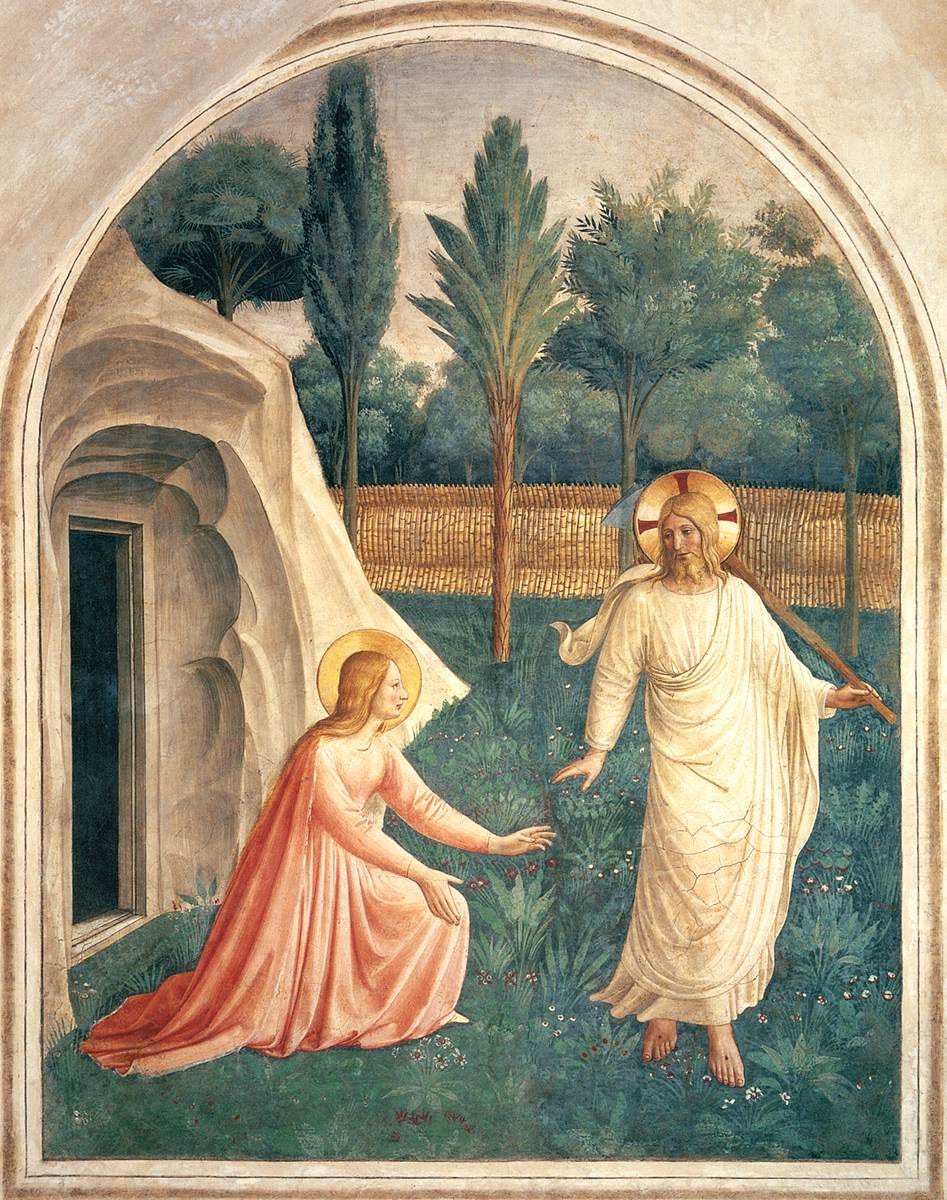
But while these discussions are interesting, they don’t create the kinds of problems that text did for representation and our mind’s sense of reality.
If you’ve read Northanger Abbey or any number of other early 19th century British novels, you will find that strain of narrative which, paradoxically, warned readers against mistaking the narratives in novels for reality itself. And of course, as I said the other day, the first modern novel, Don Quixote seems self-aware about this question — shall we admire the hyper-imaginative mind of the man of La Mancha, or should we see him as foolish, led around by his nose, failing to stay rooted in reality?
Text allowed infinite array of representation. Extreme nuances of style, poetic experimentation, romanticism, realism, modernism — all of it piled up until it was enough to “lure” brilliant people into spending most of their lives considering what was on “the page.” So a guy like Harold Bloom lived more in books than he did in the physical world. What should we think of that?
Then one more twist entered: mathematical representation. Computing. To look at it is to see the terror to come:
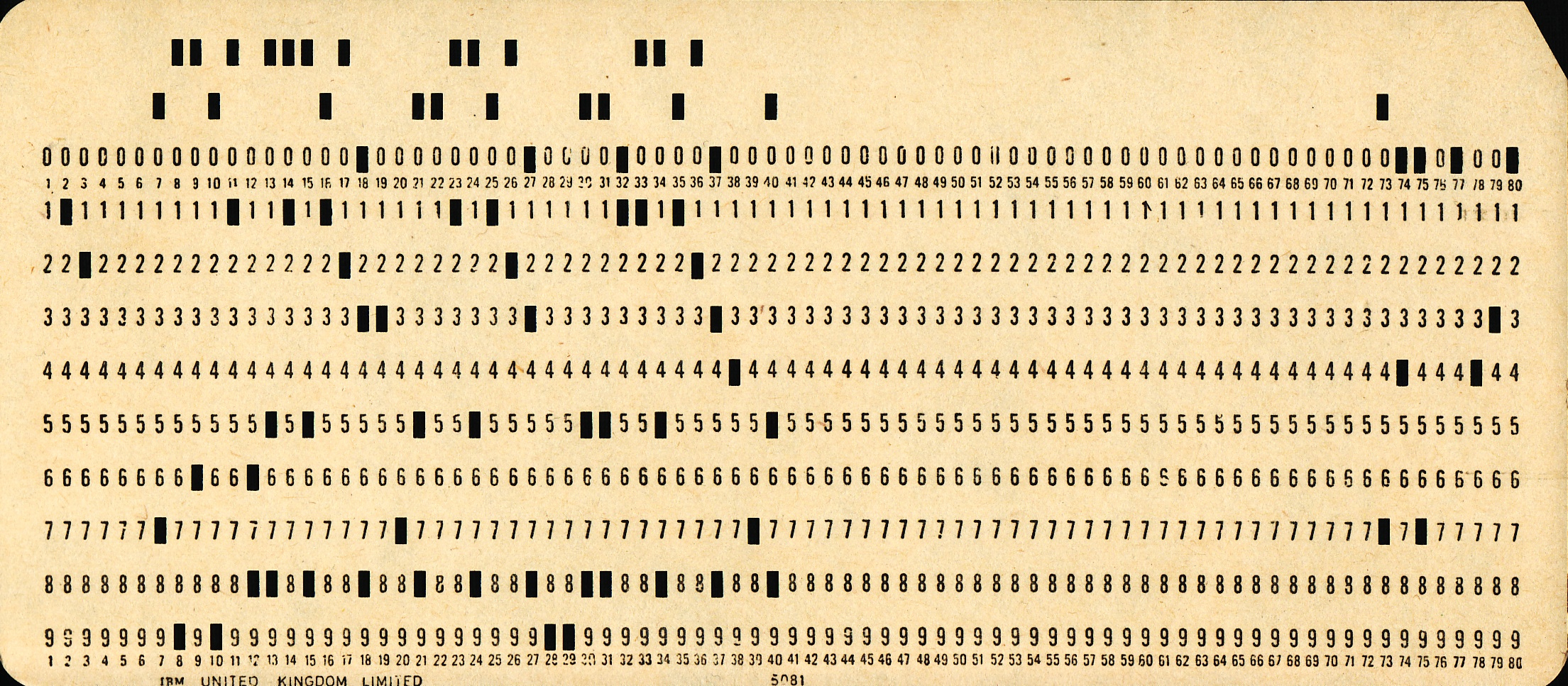
What the hell kind of representation was this? This was reality reduced — just as the paintings and sculptures and narratives had done. But reduced ruthlessly, autistically, literally to 1s and 0s.
And once the “logic” of it appeared, and spread, and caught on — the end became visible almost immediately: the entire universe could be reduced to extremely long strings of 1s and 0s, “on” and “off” signals. Yes or no. Either/or.
The only surprising thing is that the earliest philosophers of computers probably actually wouldn’t be surprised at what the internet and computing looks like now — this was exactly what they wanted. And just look at it, think about it. Everything in this post, the letters, the color of the background, the images I included — all just 1s and 0s, somehow piled up to represent some elements of reality.
It’s said that men are visual creatures — more visual than women, perhaps. That’s old wisdom, and the computer programmers figured out early on, even by the time I was a teenager, that images would be crucial for the success of the project.
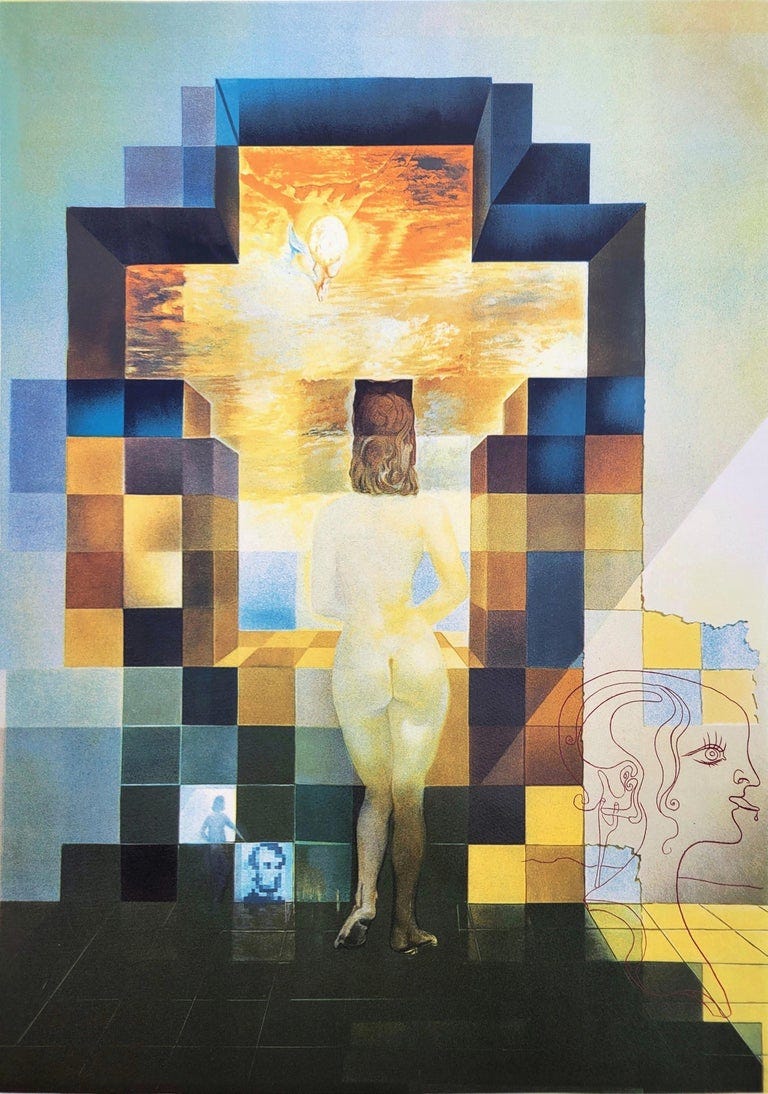
So I confess: the first time I saw a reasonably high-pixelated image of Pamela Anderson on my parents’ computer in 1994, my mind was confused. I understood that the pixels were just colors, that if I put my face close to the screen, I could actually see the red/blue/green dots. But… I knew how to squint, and my imagination participated involuntarily.
Now, of course, the 1s and 0s are powered by a booster rocket, and we are supposedly on the cusp of creating intelligent computers, computers that best the brightest humans. But it got me to thinking about this impulse humans seem to be born with to simplify and represent.
Can the universe be reduced like this? Can reality be repackaged and represented without warping it?
We want to say no, but advances in digital photography makes it sometimes almost impossible to distinguish between digital and analog.

Is reality on/off? This is the scary thought: in a sense, it is.
Any thing — every single thing — either exists or it does not exist. 1s and 0s.
You want to counter with the aspect of quality, like Robert Pirsig did: yes, but what about color, scent, etc.? But those too can and will all be “coded,” reduced to 1s and 0s.

So the question is: will anything elude the final reduction? Is there actually anything in-between? As soon as you answer with yes, and try to provide an example, any computer will be able to recognize the example, make code it as neither 6 nor 7, but 6.5, or 6.a, or whatever — and it is no longer “in-between” and elusive, it is now part of the code. Zeno’s paradox stabbing us in the back.
Perhaps scent, taste, and touch remain elusive for now. My wife has really become fascinated by scent — and I suspect she’s doing it, consciously or not, as a resistance against screenification. 2 Thessalonians 12:
They perish because they refused to love the truth and so be saved. For this reason God sends them a powerful delusion so that they will believe the lie and so that all will be condemned who have not believed the truth but have delighted in wickedness.
Do you love the truth? Is it too absurd to repeat Pontius Pilate here: “what is truth?” I don’t think it is absurd. If nothing else, that question is a sort of reminder, a reminder not altogether unlike the Venus statuette. One thing you have to get clear about—this is not the truth:

Not because it’s not highly-pixelated enough. But because it’s not reality itself, but a representation. And all representation lies/distorts/warps.
The iconophiles generally insist that there is no problem with images: they say they know that images of Jesus are not Jesus — they are only reminders of Jesus. But what does that mean? Do the images make you recollect what you have thought about Jesus? Is that what truth is? A package of thoughts you’re remembering?
Or does the image refer us to a moral directionality that we need to be reminded about? But then why does the image have to be of Jesus or Mary, etc.? Perhaps other images could provoke the same recollection of the same moral direction?
And then: is the recollection truth, or is the doing of the thing you are recollecting truth? And by the way: what is actually bad (or threatening to God) about idols? Aren’t they just reminders?
Between this and that. The un-representable middle. Is that truth? Must it be perceived? Can it be imagined? Must I participate in it?
The ineffable. The mysterious. All this, the birdsong and pollen, the 9 billion living probiotics in my kombucha — all of it is representable by 1s and 0s. Can anything elude the reduction?
Have you read the book Mount Analogue by Rene Daumal? I have not but might after reading your post. Seems to deal with some of the same basic questions.